Your gut does a lot more than digest food. It regulates your immune system, influences chronic disease risk, and may even affect your mental health, according to data from Johns Hopkins. Even so, for most Americans, gut health is an afterthought, until something goes wrong.
In our recent edition of Summus Inside Access, board-certified gastroenterologist Dr. Akash Goel, MD, breaks down the science of digestive health in a way that’s both eye-opening and actionable. Whether you’re an HR leader trying to lower healthcare costs or an employee trying to feel better day-to-day, here are the top gut health takeaways from Dr. Goel
Watch the Summus Inside Access master class with Dr. Goel
What is gut health — and why does it matter?
Gut health refers to the function and balance of your entire gastrointestinal system, including the trillions (yes, trillions!) of microbes that live there. When your GI (gastrointestinal) system is working well, it filters toxins, supports immunity, and helps regulate metabolism. When it breaks down, the health consequences can be extensive.
Americans are particularly disadvantaged when it comes to gut health. Dr. Goel notes that:
- Three-quarters of Americans are overweight or obese
- About half have diabetes or pre-diabetes, and
- Autoimmune and inflammatory diseases are rising at a rate of 3 to 9% per year
“The rate of increase is much greater than the rate of genetic change,” says Dr. Goel. “What it really comes down to is environment.” That’s actually an empowering message: If the environment is driving the problem, changing the environment can be part of the solution to better gut health.
How to improve gut health: understanding the ‘gut barrier’
Dr. Goel suggests thinking of the gut barrier like a coffee filter. It’s designed to let the good stuff through (e.g., nutrients and beneficial compounds), while keeping the harmful stuff out. The surface area of the gut lining spans roughly 400 square meters—about the size of a tennis court. And right behind that lining? About 70% of your entire immune system.
“Seventy percent of our immune system is just one cell away from a sewer,” Dr. Goel explains, invoking a phrase from noted functional medicine leader Dr. Mark Hyman. That’s not a metaphor designed to alarm, but a reminder of how critically important it is to maintain that barrier. When it becomes compromised (what’s sometimes called “leaky gut”), the door opens to chronic inflammation and disease.
Best foods for gut health: fiber and fermented options
When it comes to what to actually eat, Dr. Goel points to two categories that research consistently supports.
1. Fiber
Fiber is the primary fuel source for the bacteria that maintain your gut lining. Without it, something alarming happens: Gut bacteria start consuming the mucus layer that protects your intestinal lining instead, according to the National Library of Medicine. And Stanford Medicine studies in animal models found that by the fourth generation on a fiber-deficient, highly processed diet, about two-thirds of gut microbial diversity was completely wiped out.
Current recommendations like those by Harvard’s Katherine D. McManus, MS, RD, LDN, suggest around 30 grams of fiber per day. Hunter-gatherer populations, among the healthiest in the world by several chronic disease measures, consume closer to 100 grams daily, per the National Library of Medicine. The average American gets about 10. The takeaway, per Dr. Goel: More fiber is generally better, but it’s best to raise your intake gradually to avoid GI discomfort.
2. Fermented foods
Fermented foods like kimchi, sauerkraut, miso, yogurt, kefir, and kombucha are equally important to improve gut health, especially since the standard American diet contains so little of them. These foods contain live microbial cultures that actively increase gut diversity and reduce inflammation.
Best probiotic for gut health? It might not be a supplement
This is one of the most counterintuitive learnings from Dr. Goel’s talk, and one that could save you money. When asked about probiotics to improve gut health, he says, “Fermented foods are more likely to lead to structural changes of the gut microbiome and increased diversity, whereas probiotics are just sort of passing chips. They pass through the GI tract, but they don’t really stick.”
His advice: Before reaching for gut health supplements, consider getting your live cultures from whole, fermented foods instead. If you’re already eating a diet rich in kimchi, yogurt, or kefir, that probiotic supplement on your shelf may be mostly redundant.
Learn more about Summus’ GI Health Program and how your employees can connect with specialists like Dr. Goel here
Ultra-processed foods and the brain: it’s not about willpower
The majority (55%) of the calories in the average American diet come from ultra-processed foods, according to data from NHANES, the largest national nutrition database.
Dr. Goel is quick to note that this isn’t a personal failing.
In fact, ultra-processed foods are engineered to be addictive. As Dr. Goel describes it, “They’re made by deconstructing natural food into its chemical constituents, modifying them, and recombining them into new forms that bear little resemblance to anything found in nature.”
Some neuroscientists believe these foods can be as addictive as opioids or nicotine. That framing matters for how employers and wellness programs approach employee nutrition. Blame and shame don’t work. Structural support does.
Non-dietary ways to improve gut health
Dr. Goel also emphasizes how lifestyle factors beyond diet shape your gut microbiome. Stress, it turns out, physically damages the gut lining, the National Library of Medicine reports. On the other hand, practices that activate the parasympathetic nervous system, like rest and digestive mode, help restore it.
Other surprisingly protective factors include:
- Nature exposure, especially in children, which has been linked with greater gut microbial diversity
- Pet ownership and growing up on farms, both linked to lower rates of chronic allergic and inflammatory diseases
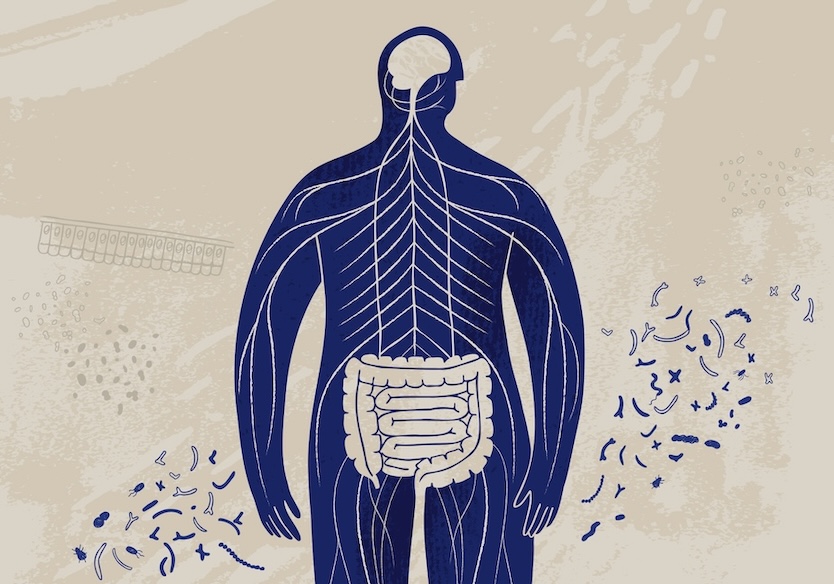
- Vagal nerve stimulation, which connects the central nervous system to the GI tract and supports gut barrier function
What gut health means for employee health
For HR and benefits leaders, this data connects directly to population health outcomes and healthcare spending. Gut-related conditions, from IBS to autoimmune disorders to metabolic disease, are among the most common and costly drivers of employee health spending, according to research from global advisory and investment firm WTW.
5 things you can do starting today:
- Add one fermented food to your daily diet
- Slowly increase fiber intake toward 30g/day, by eating more vegetables, legumes, and whole grains
- Reduce ultra-processed food consumption (and recognize it’s designed to be hard!)
- Prioritize stress management and time in nature
- Ask a gastroenterologist if you have gut health questions — not “Dr. Google”
Watch the full Inside Access episode with Dr. Goel or learn how Summus can help your employees here.